
Jobs in Ontario for UK Trained GPs
12 Aug, 20269 Mins

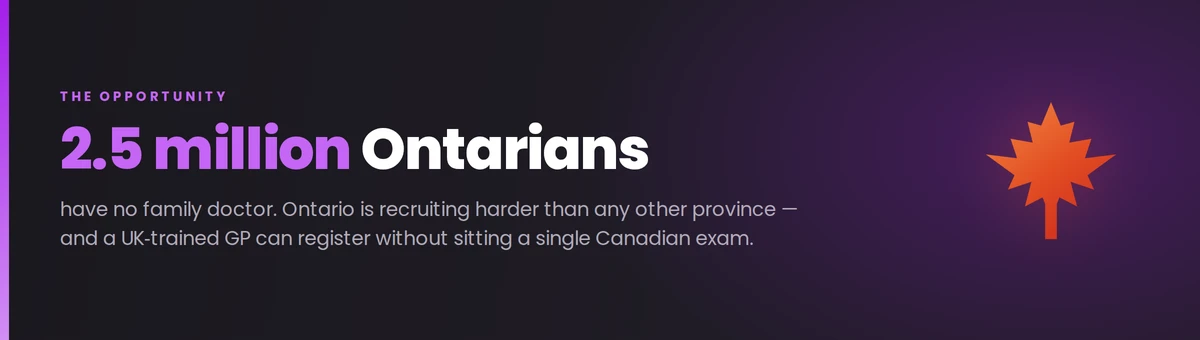
Quick answerOntario has more opportunities for UK trained GPs than any other Canadian province. You no longer need to sit the MCCQE and there’s no supervision period. In fact, if you hold MRCGP and CCT you’re already qualified to register. It can take a while to get registered but once you are, the relocation itself is quick. Earnings and cost of living mean you’ll feel better off though it’s broadly comparable to the UK in bigger cities. The real benefit is the work life balance, control over your work and the outdoor lifestyle that come with the move.
Jump to section
What do I need to register in Ontario?
Broadly there are three parts to registering and if you've got MRCGP + CCT they'll be straight forward for you For full detail, start with our guide to moving to Canada as a GP from the UK.
- Physicians Apply – they verify your ID, primary medical degree, CCT and your MRCGP.
- The College of Family Physicians of Canada (CFPC) – they recognise your MRCGP as equivalent to CFPC in Canada so you don't have to sit any exams.
- The College of Physicians and Surgeons of Ontario (CPSO) – they issue you a licence to practise in Ontario.
How long does the process take?
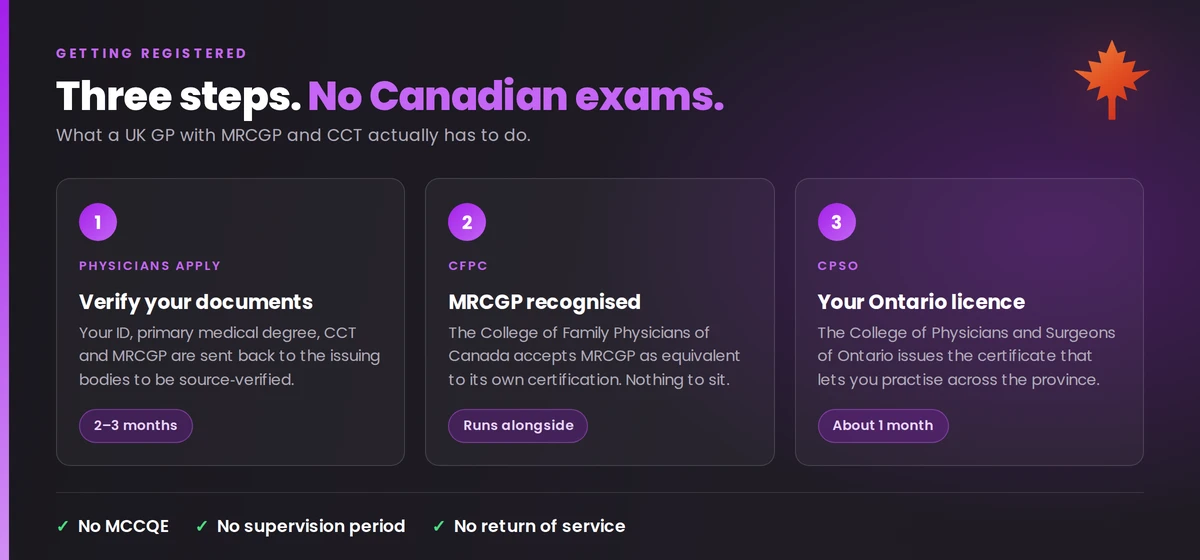
- Document verification takes 2-3 months after an online application
- The CFPC recognise your MRCGP alongside that also taking 1-2 months
- Once both are complete the CPSO issue your licence in around a month
- Once the first three are underway you can start your job search
- The prioritised visa pathway for physicians is then straightforward and takes a couple of weeks.
To be realistic about timelines, allow yourself 6-12 months for registration, recruitment and relocation. The stages overlap and it's definitely possible to make the move in under 6 months if you're motivated however it's worth accounting for delays and international moves are always a big time commitment.
Where do I find the jobs?
- Job Bank Canada have lots of job posts nationally, a bit like NHS Jobs. It’s a comprehensive site but it's overwhelming if you’re not sure where to start.
- HFOJobs is the Ontario specific version run by Ontario Health. It’s far more focused, and local recruitment teams will often reach out to you directly once you’re on it. It’s usually the more remote communities that are the most proactive.
- Agency support – BDI Resourcing have specialist recruiters for Ontario and work with the more popular locations. They’ll talk through your options, support your registration and include relocation support, all free of charge. You can browse our live Ontario GP vacancies to see what is open right now.
For the national picture, including the other provinces, see our guide to GP jobs in Canada. Whichever route you use, apply before your licence comes through. Ontario employers are used to waiting for registration and will hold a post open for the right person.
Where in Ontario should I look?
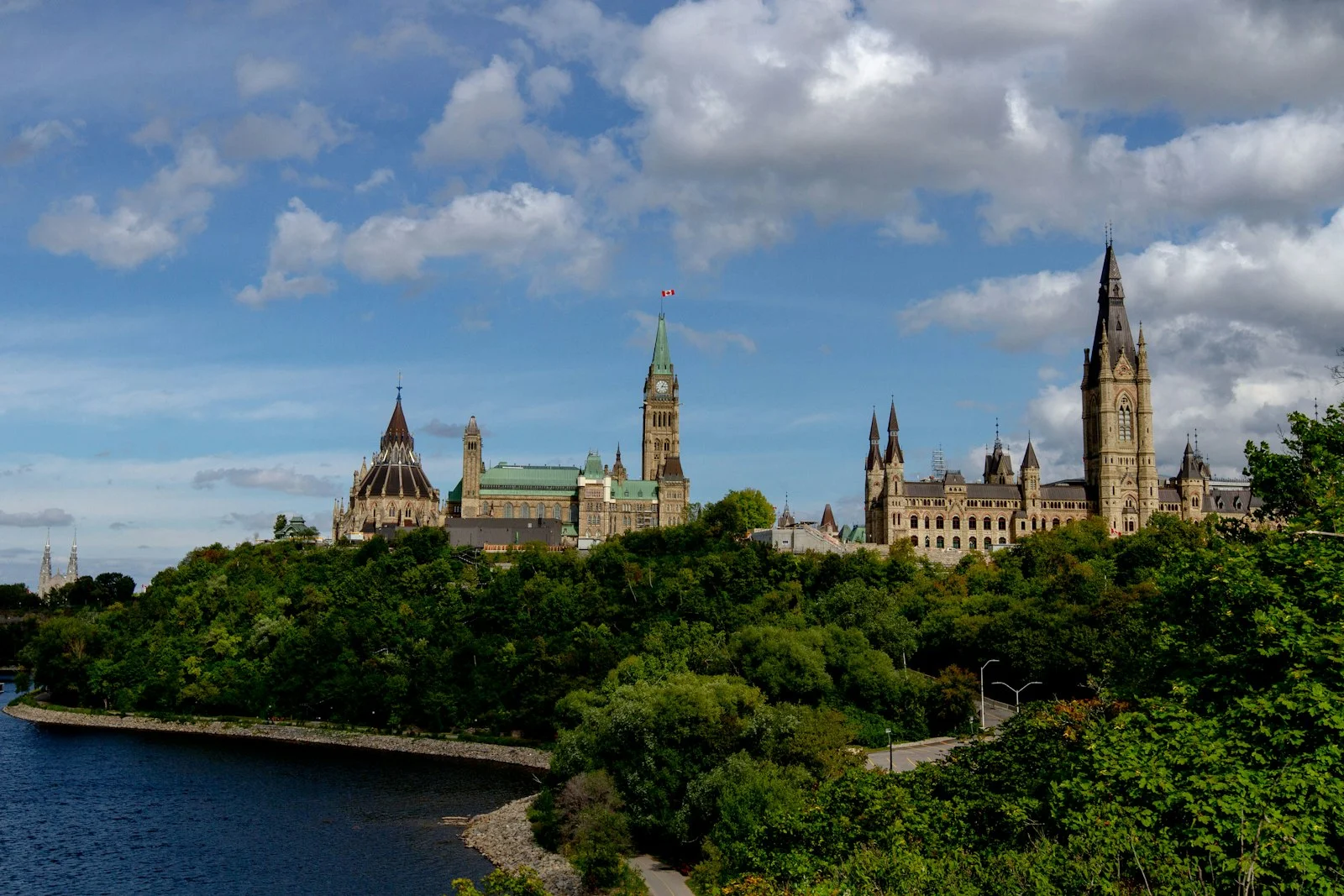
Ontario is enormous. It’s over ten times the size of the UK, so “Ontario” covers everything from a Toronto tower block to a lakeside town four hours from the nearest motorway.
Six that are worth your attention:
| Location | Why you’d pick it |
| Toronto Pop. 2.8m | The obvious starting point, and the one worth the most thought. The widest choice of jobs and the only proper airport hub, but also the most expensive corner of Ontario and the hardest to break into as a first time GP in Canada. Much like central London – superb if it suits you, and a lot of money for a lot less house if it doesn’t. |
| Ottawa Pop. 1m | The capital, and the only Ontario city other than Toronto with a direct flight to Heathrow. Over 200,000 residents have no family doctor. Housing is roughly a third cheaper than Toronto and you’re 20 minutes from proper countryside. |
| London, Ontario Pop. 545k | The best value big city in southern Ontario, with an average house around CAD $607,000. A medical school for teaching work, a serious hiring push on, and Lake Erie beaches 45 minutes south. |
| Kingston Pop. 173k | The city pays CAD $100,000 over five years to family physicians who settle there. Nearly a third of local GPs are over 60, so you take over a full established list rather than building one from scratch. Limestone Georgian streets on Lake Ontario – the most British feeling place in the province. |
| Greater Sudbury Pop. 171k | Northern Ontario money on top of your billings – the provincial grant runs CAD $84,851 to $124,730 over four years. A family home averages around CAD $509,000. A proper teaching hospital, and 330 lakes inside the city limits. |
| Huntsville & Muskoka Pop. 21k | The biggest package per head anywhere in the province. Up to CAD $80,000 from the town for setting up a practice, stacked on top of the northern grant. Broad scope work with hospital and ED cover, and Algonquin Park 45 minutes away. |
The honest rule of thumb: the further from Toronto, the more you’re paid and the less you pay for a house.
What kind of practice will I work in?
Four broad options. For a fuller picture of the day to day, read working as a GP in Canada.
- Small independent practices – a handful of doctors, often a retiring GP handing over a list. The closest thing to a traditional UK partnership.
- Larger group practices – the most common setting. You’ll hear these called FHOs, FHGs and FHNs. They aren’t buildings or employers, they’re payment models, and they mostly determine how you get paid rather than how you work.
- Large corporates – chains running walk in and family practice clinics. Less autonomy, less admin, quicker to start.
- Everything else – urgent care centres, walk in clinics, pharmacy based clinics, long term care rounds and hospitalist work. Plenty of GPs build a week out of two or three of these.
Family practice groups and larger corporates are generally the sweet spot for UK trained GPs. They are the most common setting and most in demand, a bit like practice groups in the UK. You’ll get plenty of support and more network around you than in a small independent. Larger corporates come with the advantages of helping you get set up initially, often dealing with everything that comes with self employment. They’re a little more rigid on what they offer but take away any fears you might have about being self employed.
What will I earn?
| Setting | Typical gross earnings (CAD) |
| Full service family practice | $300,000–$400,000 |
| Walk in / urgent care | $250,000–$300,000 |
| Northern & rural practice | $300,000–$400,000, plus grants up to $124,730 |
| Community signing bonuses | Up to $100,000 in some towns |
We break the numbers down properly in how much do GPs earn in Canada? but it's worth noting three things:
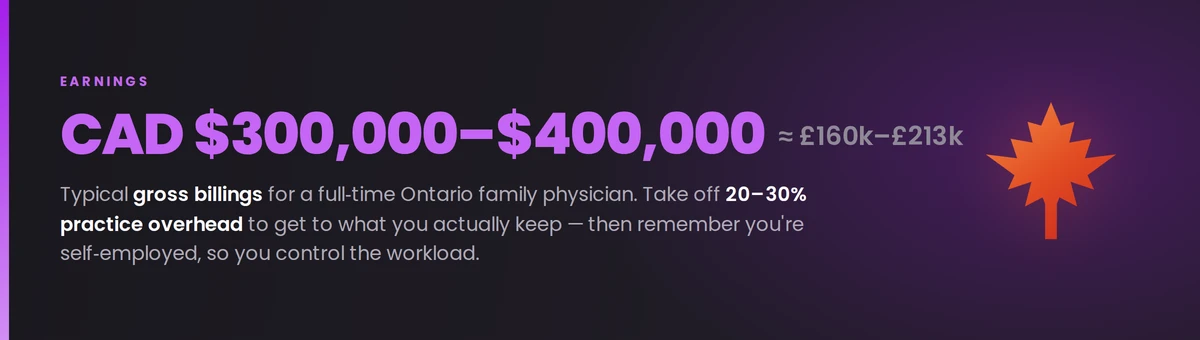
- Gross Vs Net Earnings. You'll see headline figures that appear to be high however your practice generally deduct 20-30% for overheads (rent, admin staff, IT systems etc). Check carefully whether you're being quoted gross or net earnings.
- Self employment. You'll build your patient list, decide your hours and even how long you spend with each patient - that gives you the flexibility to work on your own terms and prioritise whatever is most important to you (earnings or work-life balance).
- Pensions and Tax. Keep in mind that being self employed means accounting for your own taxes and setting up your own private pension.
Being honest, if you're considering Canada purely as a financial move then keep in mind you'll only feel marginally better off to begin with and it's once you establish your patient list over the years that the benefits of being self employed really start to pay off. People tend to move more for the lifestyle than the money.
What will it cost to live there?
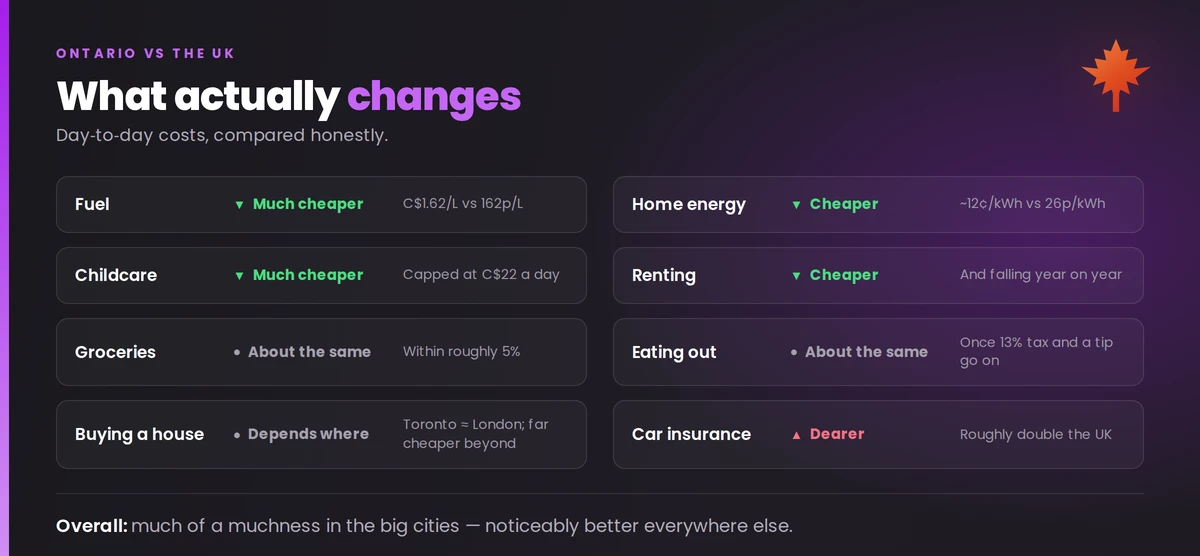
In terms of cost of living, like the UK, it very much depends where you want to live. A lot like London, Toronto has expensive house prices of over CAD $1m. Rent is reasonable in Toronto but still expensive just as it would be if you chose to live in London.
The part you have to remember is that most people in the UK don't live and work in central London. It's exactly the same in Ontario with many choosing suburbs where commuting to Toronto or possible or simply the other major cities and towns around the province that offer similar living to towns and cities in the UK. Property in Kingston comes in at an average around £294,000 but the space you get is far more in terms of house and garden.
Go remote or rural and Northern Ontario offers lakes, forest and an outdoor life at a fraction of southern prices.
Fuel and utilities are much cheaper, food is more expensive, childcare is dramatically cheaper at CAD $22 a day and car insurance is roughly double. Overall it lands close to the UK and, similarly, you can choose to live more cheaply if you're happy to get away from the expense of city live.
What will my working week look like?
- You’re self employed, so full time and part time are both genuinely on the table.
- Many GPs choose a standard four day week.
- Clinics are far less pressured, with 15–20 minutes per patient as standard.
- No QOF, no appraisal treadmill, and a fraction of the UK admin burden.
Can I earn more on top?
- Demand for family physicians is enormous, so extra work is never hard to find.
- Easy to pick up additional hours in your own clinic.
- Locums are available all over. Rural family medicine locums pay CAD $810–$1,080 a day on top of your billings.
- Plenty of urgent care and hospitalist work. Some northern hospitals pay up to CAD $2,700 for an eight hour emergency shift.
- Long term care rounds pay a monthly fee per patient and fit neatly around a clinic week.
What’s life in Ontario actually like?

- Cold winters, familiar summers. Toronto in January averages −1°C by day. July averages 28°C, which is warmer than any UK summer. You’ll want winter tyres.
- Life is lived outdoors. Ontario has over 300 provincial parks. Algonquin alone is five times the size of the Lake District.
- Schooling is free and good. Your children go free on your work permit, starting a year earlier than UK reception. Canada outperforms the UK across maths, reading and science.
- Families are well supported. Childcare is capped at CAD $22 a day, and there’s no waiting period for OHIP health cover.
- GPs are well looked after. Family medicine is a destination specialty in Canada, not a fallback, and communities compete to attract you.
Ontario for UK trained GPs: the overall picture
It’s an easy process for a UK trained GP. Your MRCGP and CCT do the heavy lifting, there are no exams, and there’s no supervision period at the end of it.
It won’t be quick though, so prepare for waits. Most of that time is spent waiting on other people’s paperwork rather than doing anything yourself.
What you’re really buying is improved work life balance and the control over your workload that comes with being self employed.
Don’t expect a huge pay rise on day one, and don’t expect the cost of living to transform your finances. Expect a better week, a bigger house and a lot more sky.
FAQs
Do I need to sit the MCCQE to work in Ontario?
No. If you hold MRCGP and completed GMC accredited GP training, the CFPC certify you without examination and the CPSO waive the MCCQE.
Is there a supervision or assessment period?
No. Ontario removed that for UK, Irish, Australian and US trained family doctors in April 2023. You start practising independently from day one.
How long does the whole thing take?
Realistically the better part of a year from starting your document verification to holding a licence. Source verification is the slow part.
Is the two week visa turnaround real?
Yes. IRCC run a 14 day service standard on work permits for physicians. It applies to the permit itself, which is the final step, so you’ll want your job offer and provincial nomination in place first.
What will I actually take home?
Gross billings of CAD $300,000–$400,000 are typical, less 20–30% overhead. Most GPs incorporate, which changes the tax position considerably.
Do I have to work rurally?
No. There’s no return of service attached to this route, so you can work anywhere in Ontario, cities included. Rural simply pays better.
Can my family come with me?
Yes. Your spouse can apply for an open work permit, and your children attend school free without needing their own study permit.
Sources
- CPSO — Recognition of certification without examination
- CFPC — Recognised training and certification outside Canada
- Medical Council of Canada — Verification of credentials
- HFOJobs — Ontario Health physician job board
- Practice Ontario — Ontario Health recruitment support
- Ontario.ca — Primary care payment models
- Ontario Medical Association — The FHO+ model
- CIHI — A profile of physicians in Canada
- Ontario.ca — Northern and Rural Recruitment and Retention Initiative
- City of Kingston — Family physician recruitment
- Town of Huntsville — Physician incentive programme
- IRCC — Faster work permit processing for doctors
- Job Bank Canada — Family physician wages, Ontario
- Ontario.ca — Applying for OHIP
Thinking about Ontario?
Ontario is a big move, and the paperwork is the least interesting part of it. Our Canada team have walked a lot of UK GPs through exactly this, and we’ll tell you honestly whether it stacks up for you.
Read next
- Moving to Canada as a GP from the UK — the whole relocation, start to finish
- GP Jobs in Canada — the national picture across every province
- How much do GPs earn in Canada? — billings, overhead and what you keep
- Working as a GP in Canada? — what the job itself actually looks like
Or if you’d rather see what’s actually out there first, have a look at our live Ontario vacancies.

Related Posts

Moving to Canada as a GP from the UK
03 Aug, 2026

Working as a GP in Canada?
03 Aug, 2026